Against the current
Since 2015, we have chosen to swim against the current. To make law a fighting profession rather than a comfortable one. To be independent when others were joining forces, bold when they grew cautious, builders when they were content to execute.
Read the editorialThe words that follow set out the firm's origins, the direction it is taking and the way its practice has been enriched.
In the beginning
2015, in Aix-en-Provence.
An ancient city, lying in the sun against the Sainte-Victoire. No port, no airport. No glass tower rises above the bell towers. Tourism, a few shops, many universities. Law firms have terracotta floor tiles and high ceilings. Industry is far away. Even the train does not come in, or only from a distance.
The ideal place to build a business law firm!
Such was our conviction when we laid the first stone of a firm that would draw its sense of tradition from the spirit of the city, and from its geography the strength of its originality and the intensity of its innovations.
From the outset, we chose to be a boutique that was both independent and demanding, where clients are chosen. The model ruled out, on principle, growth for growth's sake, the steady flow of institutional instructions and the culture of volume. It led, on the other hand, to bonds of trust, unique relationships with executives who accepted a particular kind of support, and to the transactions entrusted to no one else: the succession of a family group, its tax restructuring, its sale or its combination with a competitor.
Then the century caught up with us. It was not in our nature to remain indifferent to the economic context, which looked less like a market than a theatre of war, where giants, platforms and then artificial intelligence systems kept conquering markets through predation and unlawful conduct, leaving behind them disoriented professionals, consumers and institutions, the direct victims of hostile practices. We went in.
A few battles
- 01Two thousand five hundred taxi companies against the giant Uber.
- 02Victims of the OVH fire.
- 03More than five hundred Orpéa shareholders.
- 04France Digitale against Apple.
- 05Thousands of municipalities against the practices of Booking and Airbnb.
- 06One hundred and twenty textile brands and nineteen federations against Shein.
- 07Press and book publishers against providers of artificial intelligence models.
All without ever neglecting theoretical reflection and associative work. In 2021, we founded the Institut de Guerre Économique et Juridique, and published extensively in both the general and specialist press.
We work hard to bring to France a culture of collective litigation that did not yet have a name, and which we have made our signature.
What we refuse
Building also means making choices. It means drawing on a number of refusals that enrich our practice by narrowing it and forge our identity.
- 01
We will never have institutional clients.
No banks, insurers, funds or non-European platforms. We prefer to defend and advise those whose name is on the door: executives, entrepreneurs, family groups and mid-sized companies. This rule closes doors to us, and we know it. But it guarantees what matters most: never pleading against a client we might have had, nor keeping silent to hold on to one.
- 02
We do not practise crony capitalism.
No cross-referrals, no showcase partnerships, no cosy market arrangements. Our opponents do not change with the opportunities, and we keep our word to the end when the case demands it.
- 03
We do not sell off-the-shelf solutions: we work made to measure.
In law as in tailoring, there is ready-to-wear. Solutions interchangeable from one client to the next. We sell none of them. Every succession, every restructuring, every sale or acquisition, every tax structure, every French trust (fiducie), every family limited partnership is built on the real and particular situation of an executive, their family, their partners or their opponents. This is especially true of the heaviest transactions: a sale to a fund, a group reorganisation, a tax dispute worth several million tolerate no approximation, and that is precisely where ready-to-wear costs the most.
Made to measure has a consequence: when the solution does not exist, it has to be built. That is why we write, in the leading journals as well as in conference proceedings, and why four senior lecturers work alongside us. A structure that has withstood academic criticism before being put to a client stands up better to a judge's.
Of course, this takes time in the first days. But foundations hold better, when the headwinds rise, if they have been dug deep.
- 04
We do not bill by the hour.
Instead, we bill for an assignment, a result, a shared risk. Clients always know what they will pay before we start, and we bear part of the risk with them. We always prefer to win alongside our clients.
- 05
We are proactive.
We are not a counter where people come to drop off a problem. A regulation about to upend a sector, a market practice that penalises those subjected to it, a risk no one has yet put a figure on: when we identify them, we prepare the response, then go and offer it to those first concerned. Often, they had not yet realised that a response existed. This proactive approach gave rise to most of our collective actions; it applies just as much to a succession or a restructuring undertaken before one is forced into it.
- 06
We pass on what we have received.
We had masters, and kept the wish to become masters in turn. Almost all of us teach at university, take part in the Conférence du stage (the Bar's advocacy competition) and are involved in civic life. Every Saturday, some fifteen students chosen from among the best in the faculty advise entrepreneurs free of charge at the Clinique du Droit des Affaires, supported by one of the firm's lawyers. There they pick up certain reflexes, a love of eloquence, the reasoned use of artificial intelligence and a taste for adventure. Anyone who comes in here knows their music theory; we teach them to improvise.
- 07
We build our own tools.
A firm that works with everyone else's software works like everyone else: it follows its vendors' roadmap, moves at the pace of its competitors and entrusts its data to third parties it does not choose. We took the other path. We designed our own practice management platform, built an artificial intelligence infrastructure that we control from end to end, and developed tools that do what no product on the market did: analyse a set of accounts in a few hours, model a restructuring, recover overpaid tax. As shareholders in seven legaltechs, we also know where the profession is heading before it gets there. For clients, the result is simple: faster answers, fees that technology makes lighter, and data that never leaves our walls.
- 08
We work for executives and their families.
Our collective actions are the most visible; they are not the most numerous. Most of our work takes place without a judge: successions of family groups, sales and acquisitions, reorganisations, tax structuring, in France and internationally. These transactions demand the same intensity as litigation, and one further quality: discretion.
Our future
Three eras have followed one another in the relationship between law and technology.
The era of access
When the machine made the rules available to read.
The era of propagation
When it spread them without understanding them.
The era of entanglement
When artificial intelligence produces law, negotiates it, executes it, and data becomes the central political front.
Artificial intelligence works like a liquid printing press. It will reshuffle the production of law just as Gutenberg reshuffled the production of knowledge. Standard advice will be worth nothing; judgement, strategy and trust will be worth everything.
This is the ground on which we are building. Against standardisation, we set an ecosystem: a subsidiary dedicated to the French trust (fiducie), stakes in the tools that will shape the profession of tomorrow, a Clinique and an Écurie where lawyers are trained to use the machine without coming to resemble it. An executive who comes through our door should find everything they need when the storm arrives, in Aix-en-Provence, Paris, Brussels, and wherever we can be of use.
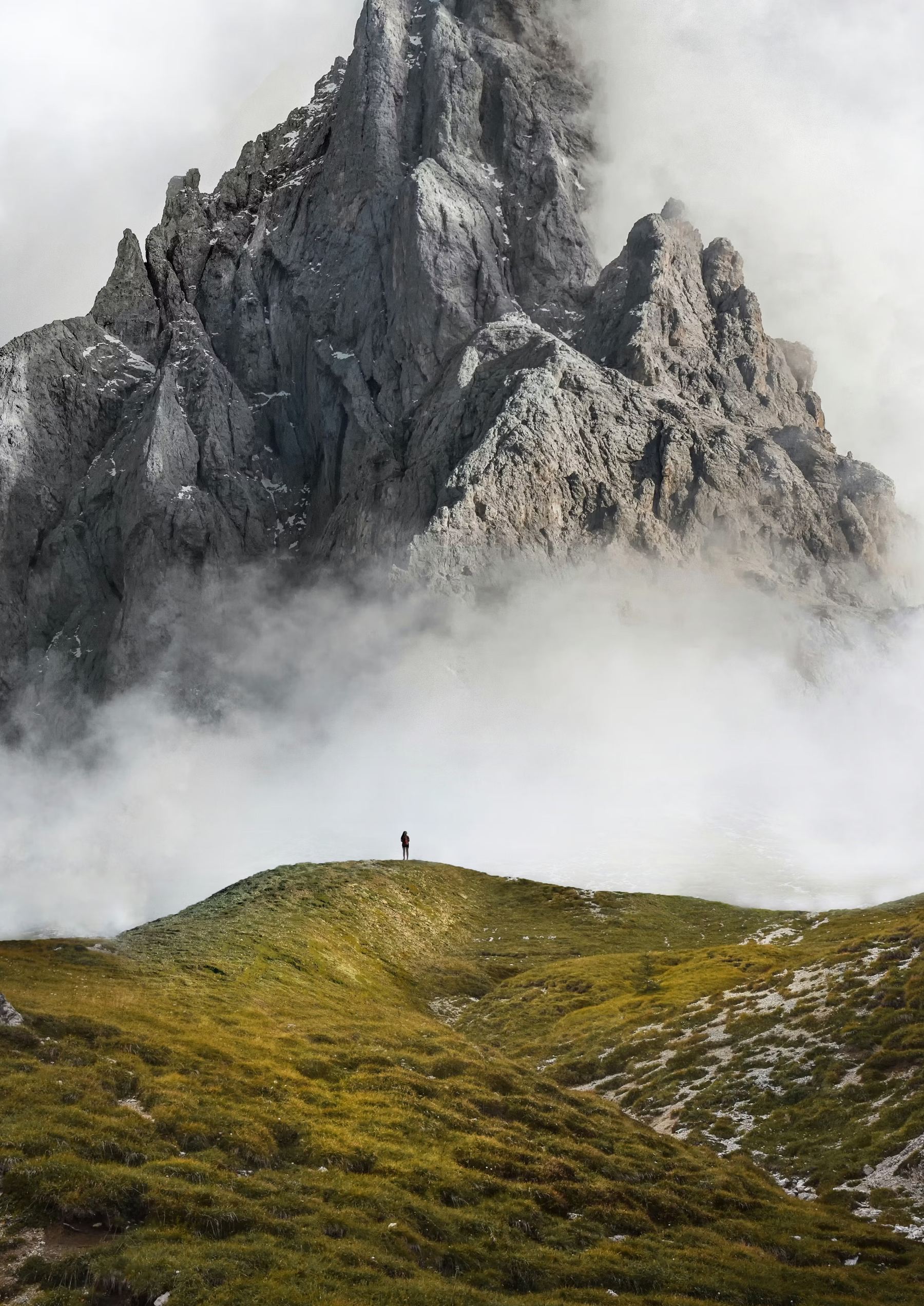
Tomorrow, more than ever, executives will need protecting as much as their companies.The world to come will expose decision-makers personally. Their reputation, their assets and their freedom will be under threat. We will help them stand firm when everything is shaking.
In conclusion
To the new partners who have joined us and to those who will become partners:
this is a builder's responsibility. Your name is now set in stone, like those of the architects on old buildings. It is up to you to take risks!
To law students who are asking themselves questions.
Who hesitate between academic excellence and practice, between general culture and technique, between humility and ambition. Do not despair. We may be looking for you. The Clinique and L'Écurie 1134 are open to you. Come on a Saturday, and you will soon know whether this house is yours.
To entrepreneurs:
you are the reason this firm exists. You alone bear the risk; we know your restless nights. We will sometimes tell you what you do not want to hear, but we will always remain at your side. In your falls, as in your climbs.
Without intensity, no victory.