

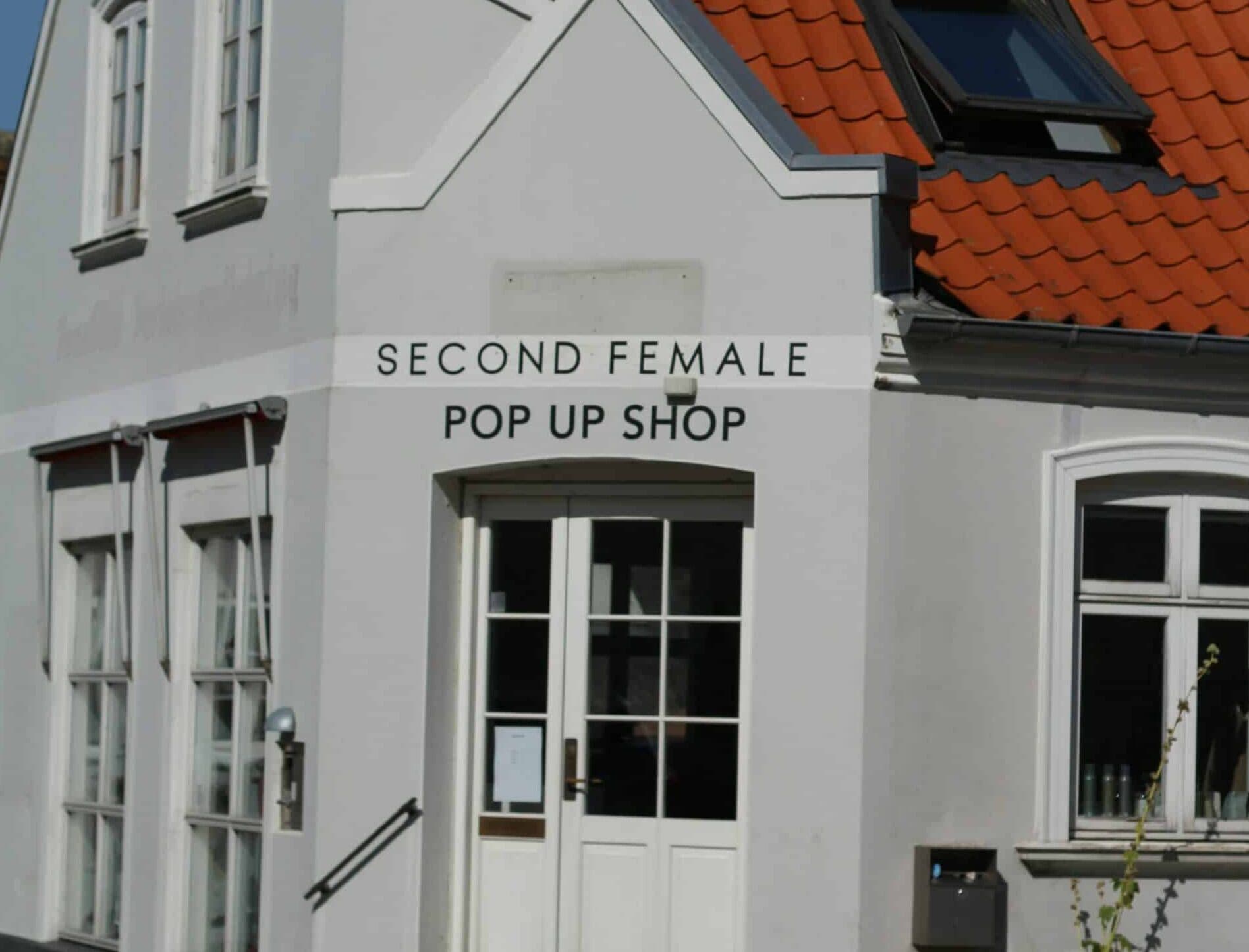
A short legal guide to temporary shops for the well-informed retailer
At a time when major fashion brands have lost nearly 20% of their stores in France since 2019 and commercial vacancy has reached 12% in some town centres, the retail sector is undergoing a profound transformation.[1]
It is in this context that the pop-up store, or temporary shop, has become a major strategic lever for ready-to-wear brands. Whether they are digital natives seeking a physical foothold or long-established brands wishing to test a new location, all of them find it an agile tool: market testing, capsule collection launches, events, gathering data in the field, and so on.
But appeal is no substitute for rigour. The legal framework of the temporary shop remains an area calling for vigilance, where recharacterisation as a commercial lease lies in wait for the unwary retailer. An overview of an arrangement in which every comma counts.
I. A regime inherently unsuited to the temporary
A commercial lease is concluded for a minimum term of nine years for the landlord and three years for the tenant, together with a right of renewal and eviction compensation: the famous “commercial ownership” (propriété commerciale).
The case law has reiterated that this regime presupposes stable and permanent premises, a regular customer base and management autonomy, all criteria foreign to the temporary shop.[2]
The operator of a pop-up store must therefore work with other contractual tools, while seeking to avoid the pitfalls of each.
II. The three contractual vehicles for temporary retail
The short-term derogatory lease (bail dérogatoire)
Provided for in Article L.145-5 of the French Commercial Code, it allows the parties to depart from the commercial lease regime for a total term not exceeding three years, including successive leases, with no minimum term: it is the instrument of choice for occupations lasting from a few weeks to a few months.[3]
This tool calls for extreme vigilance at expiry. If, when the agreed term expires, the tenant remains in the premises and the landlord does not express its objection within one month, a new lease arises, this time subject to the commercial lease regime.
The French Supreme Court (Cour de cassation) has reinforced this strictness by holding that no clause of the lease could release the landlord from this formal requirement to object. Moreover, changing the contractual label, by describing the contract as a “reciprocal provision of services” rather than a lease, has no effect where the occupant is de facto stable.[4]
The precarious occupancy agreement (convention d’occupation précaire)
Enshrined in Article L.145-5-1 of the French Commercial Code, the precarious occupancy agreement is distinguished by the existence of particular circumstances, independent of the parties’ will alone, that justify the fragility of the occupant’s rights: premises awaiting works, a restructuring project, a seasonal operation.[5]
Its advantage: it can be terminated at any time. Its weakness: the uncertainty of the precariousness criterion. If the circumstances are not sufficiently objective and documented, the risk of recharacterisation as a commercial lease remains. The reasons for relying on precariousness should be set out precisely and annexed to the contract.
The service agreement
Where the operator does not have exclusive enjoyment of the premises (which is common in department store concessions or shared spaces), the contract may be characterised as a provision of services. The benefit of this characterisation is considerable: freedom to set the term, flexible termination rights and no right of renewal for the occupant.[6]
For this characterisation to hold, the courts check that making the premises available is merely ancillary to the actual provision of services.[7]
Three criteria emerge. The first, which is decisive, concerns the reality and substance of the services provided: they must be genuine, identified in the contract and not mere window dressing. The second concerns the limited nature of the enjoyment: short duration, shared spaces, no exclusivity. The third concerns the specific fitting-out of the premises by the landlord itself, which distances the relationship from a simple rental.
III. The essential clauses
Whichever contractual route is chosen, six provisions deserve particular attention.
1. Duration and expiry
A precise term, an automatic expiry clause at the end of the term, and a penalty for late return of the premises. For a derogatory lease: it is essential to provide a mechanism reminding the landlord of its obligation to object before the expiry of the one-month period following the end of the term.
The stakes are considerable: an oversight results in conversion into a commercial lease.
2. Permitted use of the premises
Retail sale of ready-to-wear, showroom, events space. Too broad a permitted use makes recharacterisation easier; too narrow, and it restricts the business. Emphasise the temporary and event-based nature of the activity.
3. Financial terms
Occupancy fee (fixed fee, percentage of turnover, hybrid mechanism), security deposit, allocation of service charges. A turnover-based fee, common for pop-ups, requires transparent reporting and an audit clause in favour of the landlord.
4. Inventory of condition and return of the premises
Joint inventory of condition on entry and exit, reinstatement obligations, what happens to fixtures and fittings. The particular feature of pop-ups (ambitious but temporary set designs) makes it necessary to specify who dismantles, who pays and within what time frame.
5. Insurance and liability
Public liability insurance, multi-risk cover, compliance with the rules for premises open to the public (ERP). Allocate liability contractually in the event of a loss.
6. Termination clause
Automatic termination in the event of a material breach (late payment, lack of insurance, failure to comply with the permitted use). A rapid exit route for the landlord, without going to court.
IV. And from the landlord’s perspective?
The pop-up store is not a one-way tool. For the landlord, it is an effective lever against vacancy: an occupied unit is a unit that is maintained, insured, active and enhanced in value. It also makes it possible to charge fees higher than the rent under a conventional commercial lease, in return for flexibility.
Caution is nevertheless required: do not string together precarious occupancies beyond what is reasonable, or the court may find that the alleged precariousness was merely artificial. Also check compatibility with the co-ownership regulations and planning rules.
***
The paradox of the temporary is that, to succeed, it requires very demanding preparation. French commercial lease law, designed for permanence, was not conceived for these flexible formats.
It is precisely because the law provides no specific framework that the contract must, more than ever, provide for everything.
Bruzzo Dubucq assists retail brands in the legal structuring of their temporary projects, from negotiating the contract to managing its expiry. Please do not hesitate to contact us.
[1]Alliance du Commerce, annual report, Feb. 2026. Data: Retail Int., panel of 80 brands.
[2]CA Aix-en-Provence, 20 Jan. 2015, No. 13/00940.
[3]Art. L.145-5 of the French Commercial Code.
[4]Cass. 3e civ., 4 May 2010, No. 09-11.840.
[5]Art. L.145-5-1 of the French Commercial Code
[6]Art. 1713 et seq. of the French Civil Code
[7] Cass. 3e civ., 27 June 2024, No. 22-22.823; CA Paris, 1 Oct. 2024, No. 23/11364: recent case law has thus upheld this characterisation where the occupation was accompanied by genuine and identified services: reception, maintenance of common areas, security, connectivity, provision of specific equipment